Automotive Rapid Prototyping & Automotive Prototype Services
New product development and innovation is much more difficult and time consuming than most other business activities. Automotive rapid prototyping greatly enhances learning speed and reduces the risk of new automotive parts development.
Historically, the automotive industry has been using rapid prototyping as an important tool in the automotive parts design process. The extremely fast-paced automotive design cycles require an extremely fast prototyping system which can produce car parts fast and inexpensively.
The main objective of automotive prototyping is to learn quickly: how a new automotive product behaves in its natural working environment, before transferring the prototype to the production line. Many times, mistakes are learned only after a new automotive part is launched. This is the main explanation for poor automotive parts design, from product mismatch, poor engineering and function or finish, and overpriced production. In order to accelerate the learning curve, before these costly automotive prototyping mistakes are made, one must accelerate and facilitate feedback loops from tests in the lab and market trials.
Automotive Manufacturing Technologies
Working with an assortment of rapid prototyping equipment, automotive prototyping engineers utilize the most advanced 3D printers, in their quest for perfect form, function and utility. Working in advanced manufacturing centers, the automotive engineers use the technology to verify what they are doing, and, equally important, to save tremendous amounts of time, and money.
Automotive Rapid Prototyping Compresses Development Time
The advantages of using 3D rapid prototyping model creation versus viewing a cad/cam model on a computer screen are palpable. Automotive parts engineers get together discuss the pros and cons of a rapidly produced automotive parts model and discuss the pros and cons of the design, as they pass it around, twisting and viewing the prototype, and decide if that is what they had in mind. This way, problems get solved up front, before going to the assembly line! Once determined that the automotive prototype design is a go, the model can then be sent to a die maker.
Automotive Prototyping and the Die Maker Process
The die maker cannot use model to make the die, but because they have it in their hand and can look at it and feel it, they can determine where the parting lines will be and exactly how much steel they will need to produce it. The timing of the die process is greatly compressed.
Examples of Automotive Rapid Prototype Parts
· Car Engine parts
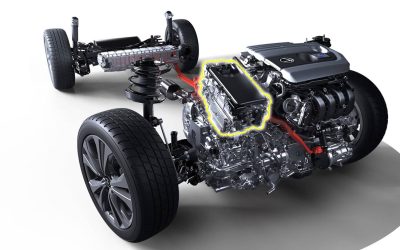
· Engine castings and parts
· Auto Body Components
· Auto Mechanical parts
· Car Dashboards
· Car Handles and Knobs
· Car Trim parts
Fail first Paradox in Automotive Rapid Prototyping
The automotive rapid prototyping paradox is to fail earlier rather than later. By failing earlier, the design engineers surprisingly succeed in accelerating the project; this greatly reduces development cost risk. By considering all automotive prototype failures as learning experiments, the engineer has much less stress, knowing that they are practicing the old adage, that success comes from ninety-nine percent failure and introspection.
Dan P. is a writer for Objet Geometries Ltd, an automotive prototyping 3D printer manufacturer.
Actron CP9015 Ford Code Scanner

Product Description
This Ford code scanner accesses Ford’s self-test system, retrieves engine trouble codes from the on-board diagnostics computer, and uses audio and visual indicators for reading the codes. This code scanner features a built-in battery which eliminates the need for a cable. The battery is not included and this item is sold individually…. More >>
Become a Automotive Mechanic
Automotive mechanics are responsible for servicing and repairing motor vehicles. At various times, their work may involve inspection of problems, routine or preventive maintenance, replacement of parts, diagnostic troubleshooting, performance testing, and/or vehicle repair. Mechanics make use of a wide variety of tools, ranging from traditional hand tools to larger power tools to the computerized shop equipment needed for interfacing with the integrated electronic systems and complex computers which regulate most of today’s vehicles. During routine service inspections, mechanics will test and if necessary, repair or replace worn parts using a checklist to ensure that they examine every critical part. To handle more intensive repair jobs, mechanics may need to replace or overhaul major systems or components of the vehicle. Troubleshooting problems on many of today’s vehicles often requires a mechanic to compare readouts from a computerized diagnostic testing device with benchmarked standards provided by the manufacturer.
Education, Certification, Licensing
Strictly speaking, there are no mandated educational requirements for becoming an automotive mechanic. Some mechanics still learn the trade by assisting and learning from experienced workers. However, successful completion of a vocational training program in automotive service technology in high school or in a postsecondary vocational school or community college is highly recommended. Courses in math, physics, and to an increasingly important degree, electronics and computer science, will be extremely helpful. Even those who graduate from a formal automotive training program will still need a year or two of experience to become a fully qualified automotive mechanic. Complex specialties, such as air conditioning or transmission repair, normally require another year or two of training and/or experience.A standard credential for automotive mechanics is the National Institute for Automotive Service Excellence (ASE) certification. While not mandatory for automotive service work, certification is becoming increasingly common to the point where today there are about 400,000 certified professionals. Certification can be earned in one or more of 8 different areas of automotive service (e.g., engine repair, brake systems, electrical systems, etc.) and is based on a combination of education/experience and the ability to pass a certification exam. Those who are skilled in multiple auto repair services and would like to increase their marketability as an all-around mechanic can pursue ASE certification in all eight areas, which will earn them the designation of Master Automobile Technician.
This article on baking schools and jobs has been provided courtesy of City Town Info.
Spectre 4277 Chrome Push-In Valve Cover Breather – 1-Inch Neck
Product Description
This push-in valve cover breather is round in shape with a plain top style, is made of triple chrome-plated steel, and features an internal baffle to prevent oil splash. It provides a tight seal with great ventilation and uses a 1 inside diameter grommet for the 1″ outside diameter neck. It fits valve covers with 1-1/4″ breather holes…. More >>
Spectre 4277 Chrome Push-In Valve Cover Breather – 1-Inch Neck